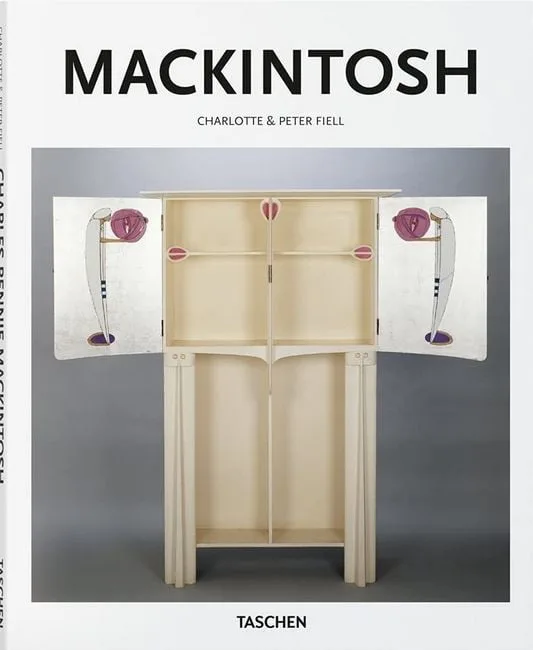
Mackintosh
Glasgow Style: The life and work of Glasgow School pioneer, Charles Rennie Mackintosh
Scottish architect, designer, and painter
Charles Rennie Mackintosh
(1868–1928) was one of the earliest pioneers of modern architecture and design. While he never received major recognition in his hometown of Glasgow, his bold new blend of simplicity and poetic details
inspired modernists across Europe
.
Mackintosh’s avant-garde approach embraced a variety of media as well as fresh stylistic devices. His multi-faceted oeuvre incorporated
architecture, furniture, graphic design, landscapes, and flower studies
. He embraced strong lines, elegant proportions, and natural motifs, combining a healthy dose of
japonisme
with a modernist sensibility for function. He preferred
bold black typography
, restrained shapes, and
tall, generous windows
suffusing rooms with light.
Mackintosh’s projects in Glasgow include the famous
Willow Tearooms
, the private residences Windyhill and The Hill House, and the Mackintosh Building at the
Glasgow School of Art
, widely considered his masterwork. Much of his work was collaborative practice with his wife, fellow artist
Margaret Macdonald
. The couple made up half of the loose
Glasgow collective known as “The Four”
; the other two were Margaret’s sister, Frances, and her husband, Herbert MacNair.
On the continent, this “
Glasgow Style
” was met with delight. In Italy, Germany, and, in particular, Austria, artists of the
Viennese Secession
and
Art Nouveau
drew much from its rectilinear, yet lyrical, forms. In this introductory book, we take in Mackintosh’s practice across art, architecture, and design to explore his particular combination of the statuesque and sensual and its
vital influence on modernist expression across Europe
.